

 https://www.dfmurphy.com/wp-content/uploads/Workers-Comp-101-for-Massachusetts-Employers-.jpg
629
1200
Murphy Insurance
https://dfmurphy.wpenginepowered.com/wp-content/uploads/Murphy-Insurance-Logo-Header.jpg
Murphy Insurance2026-06-25 07:00:272026-06-19 09:18:49Workers’ Comp 101 for Massachusetts Employers
https://www.dfmurphy.com/wp-content/uploads/Workers-Comp-101-for-Massachusetts-Employers-.jpg
629
1200
Murphy Insurance
https://dfmurphy.wpenginepowered.com/wp-content/uploads/Murphy-Insurance-Logo-Header.jpg
Murphy Insurance2026-06-25 07:00:272026-06-19 09:18:49Workers’ Comp 101 for Massachusetts Employers
1. You Are the Business—If You’re Injured, Everything Stops
When you’re self-employed, your ability to work is your livelihood. If you get hurt on the job—whether it’s a fall from a ladder, a car accident while driving to a job site, or a repetitive stress injury—you may not be able to work for days, weeks, or even months. Without Workers’ Comp, you’re on your own to cover:
- Medical bills
- Rehabilitation costs
- Lost income
- Long-term recovery expenses
Workers’ Comp can step in to pay for medical treatment and even cover a portion of your lost wages, helping you focus on recovery—not financial survival.
2. It’s Not Required—But It’s Smart Business
Sure, most states don’t require sole proprietors or self-employed individuals to carry Workers’ Comp for themselves. But that doesn’t mean it’s not a smart move. Think of it like health insurance for your business—just because it’s optional doesn’t mean it’s unnecessary. Carrying coverage shows that you’re thinking long-term, protecting your health, and minimizing risk. That’s what responsible business ownership looks like.
3. Clients May Demand It
Many clients, especially in industries like construction, consulting, or logistics, will require independent contractors to carry their own Workers’ Comp coverage. Having a policy in place can help you:
- Qualify for bigger, better contracts
- Appear more professional and prepared
- Avoid delays or disqualification from project opportunities
It’s not just protection—it’s leverage.
4. Health Insurance Isn’t the Same
You might be thinking, “I already have health insurance, why do I need this?” The answer: health insurance covers medical treatment, not lost wages. It also doesn’t cover legal costs if someone tries to claim you caused a work-related injury. Workers’ Comp provides a comprehensive safety net that includes:
- Medical expenses
- Income replacement
- Rehabilitation
- Legal protection
5. Peace of Mind Is Priceless
Running a business is demanding. Worrying about how you’ll survive financially if you get hurt shouldn’t be one more thing on your plate. Workers’ Comp gives you peace of mind so you can focus on growing your business with confidence, knowing you’re protected if the unexpected happens.
Be proactive. Be prepared. Get protected.
Just because Workers’ Comp isn’t required for self-employed individuals doesn’t mean it isn’t essential. If you are your business, then protecting yourself is protecting your business. Don’t wait until an accident happens to realize how valuable coverage could have been.
Need help figuring out if Workers’ Comp is right for your solo business? Contact us! We can help you find a policy that fits your needs and budget.
Learn about our Business Insurance Policies
Every insurance company has its unique offerings, making it challenging to compare options effectively. That’s where we shine.
https://www.dfmurphy.com/wp-content/uploads/Workers-Comp-101-for-Massachusetts-Employers-.jpg
629
1200
Murphy Insurance
https://dfmurphy.wpenginepowered.com/wp-content/uploads/Murphy-Insurance-Logo-Header.jpg
Murphy Insurance2026-06-25 07:00:272026-06-19 09:18:49Workers’ Comp 101 for Massachusetts Employers https://www.dfmurphy.com/wp-content/uploads/National-Safety-Month-Building-a-Safer-Workplace-and-a-Stronger-Business.jpg
629
1200
Murphy Insurance
https://dfmurphy.wpenginepowered.com/wp-content/uploads/Murphy-Insurance-Logo-Header.jpg
Murphy Insurance2026-06-04 07:00:232026-05-29 23:25:26National Safety Month: Building a Safer Workplace and a Stronger Business
https://www.dfmurphy.com/wp-content/uploads/National-Safety-Month-Building-a-Safer-Workplace-and-a-Stronger-Business.jpg
629
1200
Murphy Insurance
https://dfmurphy.wpenginepowered.com/wp-content/uploads/Murphy-Insurance-Logo-Header.jpg
Murphy Insurance2026-06-04 07:00:232026-05-29 23:25:26National Safety Month: Building a Safer Workplace and a Stronger Business https://www.dfmurphy.com/wp-content/uploads/Business-Insurance-Issues-1200.jpg
628
1200
Dave Schofield
https://dfmurphy.wpenginepowered.com/wp-content/uploads/Murphy-Insurance-Logo-Header.jpg
Dave Schofield2026-01-07 09:00:062026-01-16 09:26:2510 Insurance Issues Businesses Should Keep Top of Mind in 2026
https://www.dfmurphy.com/wp-content/uploads/Business-Insurance-Issues-1200.jpg
628
1200
Dave Schofield
https://dfmurphy.wpenginepowered.com/wp-content/uploads/Murphy-Insurance-Logo-Header.jpg
Dave Schofield2026-01-07 09:00:062026-01-16 09:26:2510 Insurance Issues Businesses Should Keep Top of Mind in 2026 https://www.dfmurphy.com/wp-content/uploads/Plan-a-Safer-Workplace-With-the-2026-National-Safety-Observances-Calendar.jpg
628
1200
Murphy Insurance
https://dfmurphy.wpenginepowered.com/wp-content/uploads/Murphy-Insurance-Logo-Header.jpg
Murphy Insurance2026-01-06 09:00:092026-01-16 09:31:41Plan a Safer Workplace With the 2026 National Safety Observances Calendar
https://www.dfmurphy.com/wp-content/uploads/Plan-a-Safer-Workplace-With-the-2026-National-Safety-Observances-Calendar.jpg
628
1200
Murphy Insurance
https://dfmurphy.wpenginepowered.com/wp-content/uploads/Murphy-Insurance-Logo-Header.jpg
Murphy Insurance2026-01-06 09:00:092026-01-16 09:31:41Plan a Safer Workplace With the 2026 National Safety Observances Calendar https://www.dfmurphy.com/wp-content/uploads/Safety-Goggles-1200.jpg
628
1200
Murphy Insurance
https://dfmurphy.wpenginepowered.com/wp-content/uploads/Murphy-Insurance-Logo-Header.jpg
Murphy Insurance2025-11-17 16:26:292025-11-17 21:36:32Five Strategies for Reducing Workers’ Compensation Costs
https://www.dfmurphy.com/wp-content/uploads/Safety-Goggles-1200.jpg
628
1200
Murphy Insurance
https://dfmurphy.wpenginepowered.com/wp-content/uploads/Murphy-Insurance-Logo-Header.jpg
Murphy Insurance2025-11-17 16:26:292025-11-17 21:36:32Five Strategies for Reducing Workers’ Compensation Costs https://www.dfmurphy.com/wp-content/uploads/Untitled-design-29.jpg
628
1200
Wayne Texeira
https://dfmurphy.wpenginepowered.com/wp-content/uploads/Murphy-Insurance-Logo-Header.jpg
Wayne Texeira2025-09-29 12:12:562025-10-09 13:08:01How to Make Workers’ Comp Audits Less Stressful: Tips from Our Business Account Managers
https://www.dfmurphy.com/wp-content/uploads/Untitled-design-29.jpg
628
1200
Wayne Texeira
https://dfmurphy.wpenginepowered.com/wp-content/uploads/Murphy-Insurance-Logo-Header.jpg
Wayne Texeira2025-09-29 12:12:562025-10-09 13:08:01How to Make Workers’ Comp Audits Less Stressful: Tips from Our Business Account Managers https://www.dfmurphy.com/wp-content/uploads/Person-working-ex-1200.jpg
628
1200
Murphy Insurance
https://dfmurphy.wpenginepowered.com/wp-content/uploads/Murphy-Insurance-Logo-Header.jpg
Murphy Insurance2025-05-30 13:56:352025-06-02 13:08:21I’m self-employed and don’t have employees—Workers’ Comp Coverage isn’t available | Insurance Myths
https://www.dfmurphy.com/wp-content/uploads/Person-working-2-Myth-16-1200.jpg
628
1200
Murphy Insurance
https://dfmurphy.wpenginepowered.com/wp-content/uploads/Murphy-Insurance-Logo-Header.jpg
Murphy Insurance2025-05-15 14:26:232025-06-02 13:09:42I’m self-employed and don’t have employees—I don’t need Workers’ Comp Coverage | Insurance Myths
https://www.dfmurphy.com/wp-content/uploads/Person-working-ex-1200.jpg
628
1200
Murphy Insurance
https://dfmurphy.wpenginepowered.com/wp-content/uploads/Murphy-Insurance-Logo-Header.jpg
Murphy Insurance2025-05-30 13:56:352025-06-02 13:08:21I’m self-employed and don’t have employees—Workers’ Comp Coverage isn’t available | Insurance Myths
https://www.dfmurphy.com/wp-content/uploads/Person-working-2-Myth-16-1200.jpg
628
1200
Murphy Insurance
https://dfmurphy.wpenginepowered.com/wp-content/uploads/Murphy-Insurance-Logo-Header.jpg
Murphy Insurance2025-05-15 14:26:232025-06-02 13:09:42I’m self-employed and don’t have employees—I don’t need Workers’ Comp Coverage | Insurance Myths https://www.dfmurphy.com/wp-content/uploads/Happy-co-workers-scaled.jpg
1340
2560
Murphy Insurance
https://dfmurphy.wpenginepowered.com/wp-content/uploads/Murphy-Insurance-Logo-Header.jpg
Murphy Insurance2024-12-18 12:56:062025-04-01 13:59:28Fostering a Culture of Workplace Safety
https://www.dfmurphy.com/wp-content/uploads/Happy-co-workers-scaled.jpg
1340
2560
Murphy Insurance
https://dfmurphy.wpenginepowered.com/wp-content/uploads/Murphy-Insurance-Logo-Header.jpg
Murphy Insurance2024-12-18 12:56:062025-04-01 13:59:28Fostering a Culture of Workplace Safety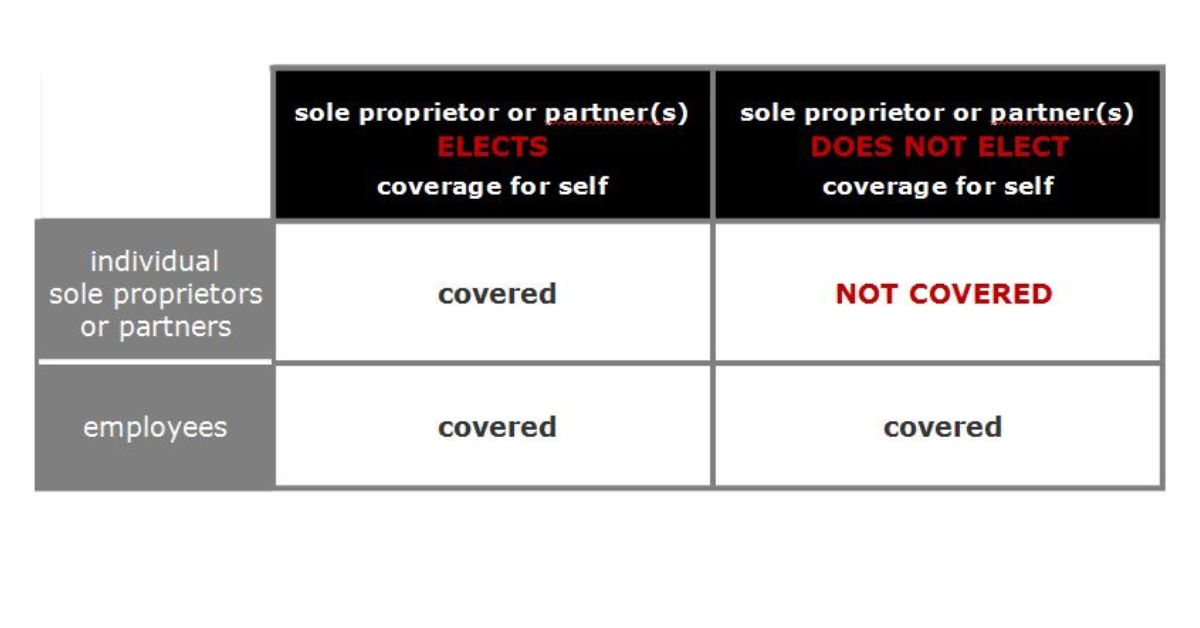 https://www.dfmurphy.com/wp-content/uploads/Untitled-design-154.jpg
628
1200
Murphy Insurance
https://dfmurphy.wpenginepowered.com/wp-content/uploads/Murphy-Insurance-Logo-Header.jpg
Murphy Insurance2024-03-29 09:00:002024-08-20 11:54:26Sole Proprietors and Partners Not Always Covered by Workers’ Comp
https://www.dfmurphy.com/wp-content/uploads/Untitled-design-154.jpg
628
1200
Murphy Insurance
https://dfmurphy.wpenginepowered.com/wp-content/uploads/Murphy-Insurance-Logo-Header.jpg
Murphy Insurance2024-03-29 09:00:002024-08-20 11:54:26Sole Proprietors and Partners Not Always Covered by Workers’ Comp https://www.dfmurphy.com/wp-content/uploads/Untitled-design-103.jpg
628
1200
Murphy Insurance
https://dfmurphy.wpenginepowered.com/wp-content/uploads/Murphy-Insurance-Logo-Header.jpg
Murphy Insurance2024-02-28 16:18:132026-05-04 16:05:56Insuring Your Home-Based Business
https://www.dfmurphy.com/wp-content/uploads/Untitled-design-103.jpg
628
1200
Murphy Insurance
https://dfmurphy.wpenginepowered.com/wp-content/uploads/Murphy-Insurance-Logo-Header.jpg
Murphy Insurance2024-02-28 16:18:132026-05-04 16:05:56Insuring Your Home-Based Business https://www.dfmurphy.com/wp-content/uploads/Untitled-design-5.jpg
628
1200
Murphy Insurance
https://dfmurphy.wpenginepowered.com/wp-content/uploads/Murphy-Insurance-Logo-Header.jpg
Murphy Insurance2024-02-21 09:00:102024-07-18 15:27:32Workers’ Compensation Insurance: 3 Key Factors to Consider
https://www.dfmurphy.com/wp-content/uploads/Untitled-design-5.jpg
628
1200
Murphy Insurance
https://dfmurphy.wpenginepowered.com/wp-content/uploads/Murphy-Insurance-Logo-Header.jpg
Murphy Insurance2024-02-21 09:00:102024-07-18 15:27:32Workers’ Compensation Insurance: 3 Key Factors to Consider https://www.dfmurphy.com/wp-content/uploads/Untitled-design-68-1.jpg
628
1200
Murphy Insurance
https://dfmurphy.wpenginepowered.com/wp-content/uploads/Murphy-Insurance-Logo-Header.jpg
Murphy Insurance2023-08-16 09:00:362024-07-29 14:41:06Starting a Business? Know the Risk Factors that Go into Pricing Your Business Coverage
https://www.dfmurphy.com/wp-content/uploads/Untitled-design-29.jpg
628
1200
Murphy Insurance
https://dfmurphy.wpenginepowered.com/wp-content/uploads/Murphy-Insurance-Logo-Header.jpg
Murphy Insurance2023-07-13 09:00:332025-10-08 12:20:07Understanding Insurance Audits – Business Insurance Audits
https://www.dfmurphy.com/wp-content/uploads/Untitled-design-68-1.jpg
628
1200
Murphy Insurance
https://dfmurphy.wpenginepowered.com/wp-content/uploads/Murphy-Insurance-Logo-Header.jpg
Murphy Insurance2023-08-16 09:00:362024-07-29 14:41:06Starting a Business? Know the Risk Factors that Go into Pricing Your Business Coverage
https://www.dfmurphy.com/wp-content/uploads/Untitled-design-29.jpg
628
1200
Murphy Insurance
https://dfmurphy.wpenginepowered.com/wp-content/uploads/Murphy-Insurance-Logo-Header.jpg
Murphy Insurance2023-07-13 09:00:332025-10-08 12:20:07Understanding Insurance Audits – Business Insurance Audits https://www.dfmurphy.com/wp-content/uploads/Untitled-design-104.jpg
628
1200
Murphy Insurance
https://dfmurphy.wpenginepowered.com/wp-content/uploads/Murphy-Insurance-Logo-Header.jpg
Murphy Insurance2020-09-02 09:00:262024-07-29 15:23:33Tips for Workers’ Compensation Policyholders During COVID-19
https://www.dfmurphy.com/wp-content/uploads/Untitled-design-104.jpg
628
1200
Murphy Insurance
https://dfmurphy.wpenginepowered.com/wp-content/uploads/Murphy-Insurance-Logo-Header.jpg
Murphy Insurance2020-09-02 09:00:262024-07-29 15:23:33Tips for Workers’ Compensation Policyholders During COVID-19 https://www.dfmurphy.com/wp-content/uploads/Untitled-design-106.jpg
628
1200
Murphy Insurance
https://dfmurphy.wpenginepowered.com/wp-content/uploads/Murphy-Insurance-Logo-Header.jpg
Murphy Insurance2015-10-06 09:00:492024-07-23 16:01:36MA Workers Comp Payroll Basis for Sole Proprieters & Partners, effective October 1, 2015
https://www.dfmurphy.com/wp-content/uploads/Untitled-design-106.jpg
628
1200
Murphy Insurance
https://dfmurphy.wpenginepowered.com/wp-content/uploads/Murphy-Insurance-Logo-Header.jpg
Murphy Insurance2015-10-06 09:00:492024-07-23 16:01:36MA Workers Comp Payroll Basis for Sole Proprieters & Partners, effective October 1, 2015 https://www.dfmurphy.com/wp-content/uploads/Untitled-design-23-2.jpg
628
1200
Murphy Insurance
https://dfmurphy.wpenginepowered.com/wp-content/uploads/Murphy-Insurance-Logo-Header.jpg
Murphy Insurance2015-01-16 09:00:422024-07-29 16:50:27Where You Buy Workers Comp Can Make a Difference
https://www.dfmurphy.com/wp-content/uploads/Untitled-design-23-2.jpg
628
1200
Murphy Insurance
https://dfmurphy.wpenginepowered.com/wp-content/uploads/Murphy-Insurance-Logo-Header.jpg
Murphy Insurance2015-01-16 09:00:422024-07-29 16:50:27Where You Buy Workers Comp Can Make a Difference https://www.dfmurphy.com/wp-content/uploads/Untitled-design-157.jpg
628
1200
Murphy Insurance
https://dfmurphy.wpenginepowered.com/wp-content/uploads/Murphy-Insurance-Logo-Header.jpg
Murphy Insurance2014-12-04 09:00:592024-07-23 19:00:16New OSHA Requirements for Reporting Severe Injuries Effective January 1, 2015
https://www.dfmurphy.com/wp-content/uploads/Untitled-design-157.jpg
628
1200
Murphy Insurance
https://dfmurphy.wpenginepowered.com/wp-content/uploads/Murphy-Insurance-Logo-Header.jpg
Murphy Insurance2014-12-04 09:00:592024-07-23 19:00:16New OSHA Requirements for Reporting Severe Injuries Effective January 1, 2015 https://www.dfmurphy.com/wp-content/uploads/Person-on-Computer-1200.jpg
628
1200
Murphy Insurance
https://dfmurphy.wpenginepowered.com/wp-content/uploads/Murphy-Insurance-Logo-Header.jpg
Murphy Insurance2013-12-19 09:00:222025-04-02 13:50:42MA Dept of Industrial Accidents Requiring Electronic Filing of All First Reports of Injury by Jan 1, 2014
https://www.dfmurphy.com/wp-content/uploads/Person-on-Computer-1200.jpg
628
1200
Murphy Insurance
https://dfmurphy.wpenginepowered.com/wp-content/uploads/Murphy-Insurance-Logo-Header.jpg
Murphy Insurance2013-12-19 09:00:222025-04-02 13:50:42MA Dept of Industrial Accidents Requiring Electronic Filing of All First Reports of Injury by Jan 1, 2014 https://www.dfmurphy.com/wp-content/uploads/Untitled-design-107.jpg
628
1200
Murphy Insurance
https://dfmurphy.wpenginepowered.com/wp-content/uploads/Murphy-Insurance-Logo-Header.jpg
Murphy Insurance2012-10-06 09:00:042024-08-20 13:55:35Managing Workers’ Comp Costs
https://www.dfmurphy.com/wp-content/uploads/Untitled-design-107.jpg
628
1200
Murphy Insurance
https://dfmurphy.wpenginepowered.com/wp-content/uploads/Murphy-Insurance-Logo-Header.jpg
Murphy Insurance2012-10-06 09:00:042024-08-20 13:55:35Managing Workers’ Comp Costs https://www.dfmurphy.com/wp-content/uploads/Untitled-design-105.jpg
628
1200
Murphy Insurance
https://dfmurphy.wpenginepowered.com/wp-content/uploads/Murphy-Insurance-Logo-Header.jpg
Murphy Insurance2010-02-05 09:00:432024-08-20 14:00:41Workers’ Comp Requirements for Out of State Work: NH Enforcement Change
https://www.dfmurphy.com/wp-content/uploads/Untitled-design-105.jpg
628
1200
Murphy Insurance
https://dfmurphy.wpenginepowered.com/wp-content/uploads/Murphy-Insurance-Logo-Header.jpg
Murphy Insurance2010-02-05 09:00:432024-08-20 14:00:41Workers’ Comp Requirements for Out of State Work: NH Enforcement Change
