
To stay safe in a storm, know the truth about lightning dangers
“When thunder roars, go indoors!” is a truism that actually holds up. But much of what we think we know about lightning is fiction. Here are some common myths and facts that will keep you and your loved ones safe in a storm.
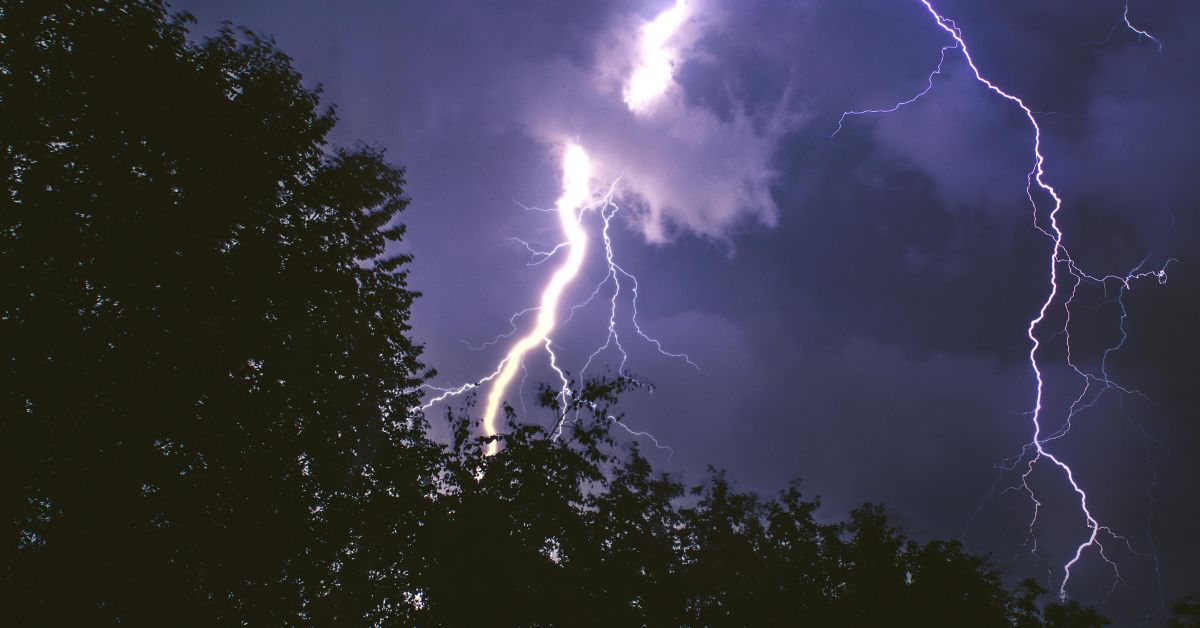
At any given time on our planet Earth, there are 1,800 thunderstorms in progress, and with them comes lightning. Property damage from lightning is covered by standard homeowners insurance for your home and the comprehensive portion of an auto policy for your car. Still, bodily harm from lightning isn’t easily remedied.
During a thunderstorm, it’s best to take shelter in a house, other structure, or a hard-topped, fully enclosed vehicle. However, as one of these options may not be available to you, your safety and well-being may depend on knowing the difference between these lightning myths and the facts.
Myth #1 – Lightning never strikes twice in the same place.
Fact: Lightning often strikes the same place repeatedly, especially if it’s a tall, pointy, isolated object. The Empire State Building was once used as a lightning laboratory because it is hit nearly 25 times per year and has been known to have been hit up to a dozen times during a single storm.
Myth #2 – Lightning only strikes the tallest objects.
Fact: Lightning is indiscriminate, and it can find you anywhere. Lightning may hit the ground instead of a tree, cars instead of nearby telephone poles, and parking lots instead of buildings.
Myth #3 – If you’re stuck in a thunderstorm, being under a tree is better than no shelter.
Fact: Sheltering under a tree is the worst thing you can do. If lightning hits the tree, a “ground charge” may spread out from the tree in all directions. Being underneath a tree is the second leading cause of lightning casualties.
Myth #4 – You’re safe if you don’t see rain or clouds.
Fact: Lightning often strikes more than three miles from the thunderstorm, far outside the rain, or even the thunderstorm cloud. Though infrequent, “bolts from the blue” have been known to strike areas as distant as 10 miles from their thunderstorm origins, where the skies appear clear.
Myth #5 – A car’s rubber tires will protect you from lightning
Fact: True, being in a car will likely protect you. But most vehicles are safe because the metal roof and sides divert lightning around you—the rubber tires have little to do with keeping you safe. Convertibles, motorcycles, bikes, open-shelled outdoor recreation vehicles, and cars with plastic or fiberglass shells offer no lightning protection.
Myth #6 – Lie flat on the ground if you’re outside in a storm.
Fact: Lying flat on the ground makes you more vulnerable to electrocution, not less. Lightning generates potentially deadly electrical currents along the ground in all directions—by lying down, you’re providing more potential points on your body to hit.
Myth #7 – You’ll be electrocuted if you touch a lightning victim.
Fact: The human body doesn’t store electricity. It is perfectly safe to touch a lightning victim to give them first aid.
Myth #8 – Wearing metal on your body attracts lightning.
Fact: The presence of metal makes very little difference in determining where lightning will strike. Height, pointy shape, and isolation are the dominant factors that determine whether lightning will strike an object (including you). However, touching or being near metal objects like a fence can be unsafe when thunderstorms are nearby. If lightning does happen to hit one area of the wall—even a long distance away—the metal can conduct the electricity and electrocute you.
Myth #9 – A house will always keep you safe from lightning.
Fact: While a house is the safest place you can be during a storm, just going inside isn’t enough. You must avoid any conducting path leading outside, such as electrical appliances, wires, TV cables, plumbing, metal doors, or metal window frames. Don’t stand near a window to watch the lightning. An inside room is generally safe, but a home equipped with a professionally installed lightning protection system is the safest shelter.
Myth #10 – Surge suppressors can protect a home against lightning.
Fact: Surge arresters and suppressors are essential components of a complete lightning protection system but can do nothing to protect a structure against a direct lightning strike. To provide whole-house protection, these items must be installed with a lightning protection system.
Source: Insurance Information Institute
 https://www.dfmurphy.com/wp-content/uploads/Umbrella-Insurance-1.jpg
628
1200
Murphy Insurance
https://dfmurphy.wpenginepowered.com/wp-content/uploads/Murphy-Insurance-Logo-Header.jpg
Murphy Insurance2026-03-01 08:12:512025-09-30 10:10:07Understanding the Importance of Umbrella Insurance: Why It’s Worth Considering
https://www.dfmurphy.com/wp-content/uploads/Umbrella-Insurance-1.jpg
628
1200
Murphy Insurance
https://dfmurphy.wpenginepowered.com/wp-content/uploads/Murphy-Insurance-Logo-Header.jpg
Murphy Insurance2026-03-01 08:12:512025-09-30 10:10:07Understanding the Importance of Umbrella Insurance: Why It’s Worth Considering https://www.dfmurphy.com/wp-content/uploads/What-to-Do-When-Ice-Dams-Form-A-Practical-Guide-for-New-England-Homeowners.jpg
628
1200
Wayne Texeira
https://dfmurphy.wpenginepowered.com/wp-content/uploads/Murphy-Insurance-Logo-Header.jpg
Wayne Texeira2026-02-25 17:02:182026-02-25 17:06:07What to Do When Ice Dams Form: A Practical Guide for New England Homeowners
https://www.dfmurphy.com/wp-content/uploads/What-to-Do-When-Ice-Dams-Form-A-Practical-Guide-for-New-England-Homeowners.jpg
628
1200
Wayne Texeira
https://dfmurphy.wpenginepowered.com/wp-content/uploads/Murphy-Insurance-Logo-Header.jpg
Wayne Texeira2026-02-25 17:02:182026-02-25 17:06:07What to Do When Ice Dams Form: A Practical Guide for New England Homeowners https://www.dfmurphy.com/wp-content/uploads/Carbon-Monoxide-Safety-for-Your-Home-and-Your-Vehicle.jpg
628
1200
Wayne Texeira
https://dfmurphy.wpenginepowered.com/wp-content/uploads/Murphy-Insurance-Logo-Header.jpg
Wayne Texeira2026-02-25 16:49:162026-02-25 16:55:36Carbon Monoxide Safety for Your Home and Your Vehicle
https://www.dfmurphy.com/wp-content/uploads/Carbon-Monoxide-Safety-for-Your-Home-and-Your-Vehicle.jpg
628
1200
Wayne Texeira
https://dfmurphy.wpenginepowered.com/wp-content/uploads/Murphy-Insurance-Logo-Header.jpg
Wayne Texeira2026-02-25 16:49:162026-02-25 16:55:36Carbon Monoxide Safety for Your Home and Your Vehicle https://www.dfmurphy.com/wp-content/uploads/Black-History-Month-Insurance-1200-1.jpg
628
1200
Wayne Texeira
https://dfmurphy.wpenginepowered.com/wp-content/uploads/Murphy-Insurance-Logo-Header.jpg
Wayne Texeira2026-02-19 09:59:522026-02-19 12:58:40Honoring Black History Month: Contributions in the Insurance Industry
https://www.dfmurphy.com/wp-content/uploads/Black-History-Month-Insurance-1200-1.jpg
628
1200
Wayne Texeira
https://dfmurphy.wpenginepowered.com/wp-content/uploads/Murphy-Insurance-Logo-Header.jpg
Wayne Texeira2026-02-19 09:59:522026-02-19 12:58:40Honoring Black History Month: Contributions in the Insurance Industry https://www.dfmurphy.com/wp-content/uploads/Life-Insurance-Love-Insurance-1200.jpg
628
1200
Murphy Insurance
https://dfmurphy.wpenginepowered.com/wp-content/uploads/Murphy-Insurance-Logo-Header.jpg
Murphy Insurance2026-02-13 15:23:592026-02-13 15:44:38Love Insurance: How Life Insurance Can Be the Best Valentine’s Gift
https://www.dfmurphy.com/wp-content/uploads/Life-Insurance-Love-Insurance-1200.jpg
628
1200
Murphy Insurance
https://dfmurphy.wpenginepowered.com/wp-content/uploads/Murphy-Insurance-Logo-Header.jpg
Murphy Insurance2026-02-13 15:23:592026-02-13 15:44:38Love Insurance: How Life Insurance Can Be the Best Valentine’s Gift https://www.dfmurphy.com/wp-content/uploads/Shoveling-snow-scaled.jpg
1340
2560
Murphy Insurance
https://dfmurphy.wpenginepowered.com/wp-content/uploads/Murphy-Insurance-Logo-Header.jpg
Murphy Insurance2026-02-05 12:33:242026-02-07 13:28:54Snowmelt Damage Prevention Tips
https://www.dfmurphy.com/wp-content/uploads/Shoveling-snow-scaled.jpg
1340
2560
Murphy Insurance
https://dfmurphy.wpenginepowered.com/wp-content/uploads/Murphy-Insurance-Logo-Header.jpg
Murphy Insurance2026-02-05 12:33:242026-02-07 13:28:54Snowmelt Damage Prevention Tips https://www.dfmurphy.com/wp-content/uploads/Side-view-mirror-scaled.jpg
1340
2560
Murphy Insurance
https://dfmurphy.wpenginepowered.com/wp-content/uploads/Murphy-Insurance-Logo-Header.jpg
Murphy Insurance2026-02-02 09:00:382026-02-05 16:39:51The Defensive Driving Process
https://www.dfmurphy.com/wp-content/uploads/Side-view-mirror-scaled.jpg
1340
2560
Murphy Insurance
https://dfmurphy.wpenginepowered.com/wp-content/uploads/Murphy-Insurance-Logo-Header.jpg
Murphy Insurance2026-02-02 09:00:382026-02-05 16:39:51The Defensive Driving Process https://www.dfmurphy.com/wp-content/uploads/Be-Ready-for-Severe-Winter-Weather-Snowstorms-Ice-and-Extreme-Cold.jpg
628
1200
Murphy Insurance
https://dfmurphy.wpenginepowered.com/wp-content/uploads/Murphy-Insurance-Logo-Header.jpg
Murphy Insurance2026-01-22 18:03:182026-01-23 08:42:56Be Ready for Severe Winter Weather: Snowstorms, Ice, and Extreme Cold
https://www.dfmurphy.com/wp-content/uploads/Be-Ready-for-Severe-Winter-Weather-Snowstorms-Ice-and-Extreme-Cold.jpg
628
1200
Murphy Insurance
https://dfmurphy.wpenginepowered.com/wp-content/uploads/Murphy-Insurance-Logo-Header.jpg
Murphy Insurance2026-01-22 18:03:182026-01-23 08:42:56Be Ready for Severe Winter Weather: Snowstorms, Ice, and Extreme Cold https://www.dfmurphy.com/wp-content/uploads/Chimney-scaled.jpg
1340
2560
Murphy Insurance
https://dfmurphy.wpenginepowered.com/wp-content/uploads/Murphy-Insurance-Logo-Header.jpg
Murphy Insurance2026-01-22 09:00:452025-12-10 13:28:51Chimney Maintenance Is Essential
https://www.dfmurphy.com/wp-content/uploads/Chimney-scaled.jpg
1340
2560
Murphy Insurance
https://dfmurphy.wpenginepowered.com/wp-content/uploads/Murphy-Insurance-Logo-Header.jpg
Murphy Insurance2026-01-22 09:00:452025-12-10 13:28:51Chimney Maintenance Is EssentialVisit Our Personal Insurance Page

Life is an ever-changing journey, and it deserves a thoughtful, comprehensive plan to protect the things and people that matter most. Our dedicated team at Murphy Insurance is here to assist you in creating that plan. With a wide range of product options at our disposal, we ensure that your plan is tailored precisely to your requirements. Our commitment to providing clear, intelligent guidance to help you achieve true peace of mind. Learn more about our personal insurance portfolio.

